
1 · Situation
Enter a future
Begin with an uncertain AI situation. Players encounter the people, institutions, opportunities and tensions already present.
A participatory game for imagining, contesting and reshaping AI futures. Instead of asking only what could go wrong, players practise the capacity to shape what comes next.
Begin with an uncertain AI situation. Players encounter the people, institutions, opportunities and tensions already present.

Ask who has choices and influence, then construct an alternative route through technology, institutions, governance or collective action.

An inject changes the situation. The first pathway may fail. Players adapt, negotiate and build another route rather than defend one fixed plan.

Whose future is being pursued? Players reconsider what is worth pursuing, for whom, and what trade-offs remain.
Each group produces a Hope Pathway. The Atlas combines these contributions to reveal where people locate agency, which routes for change recur, and where ideas of flourishing converge or conflict.
The facilitator introduces an inject. Players must ask whether agency has shifted, whether another pathway is possible, and whether the original destination still deserves to be pursued.
Agency — who retains meaningful choices and influence?
Design — what alternatives can be built?
Learning — what changes after shock or disagreement?
Flourishing — whose idea of a better future?
Hope Games are a proposed sociotechnical method inspired by tabletop exercises and wargames, widening participation and shifting attention from risk response alone towards agency and future-making.
Traditional risk exercises often begin with a familiar question: What goes wrong — and how do institutions respond?
A Hope Game asks something different:
Who gets to imagine, contest and shape what happens next?
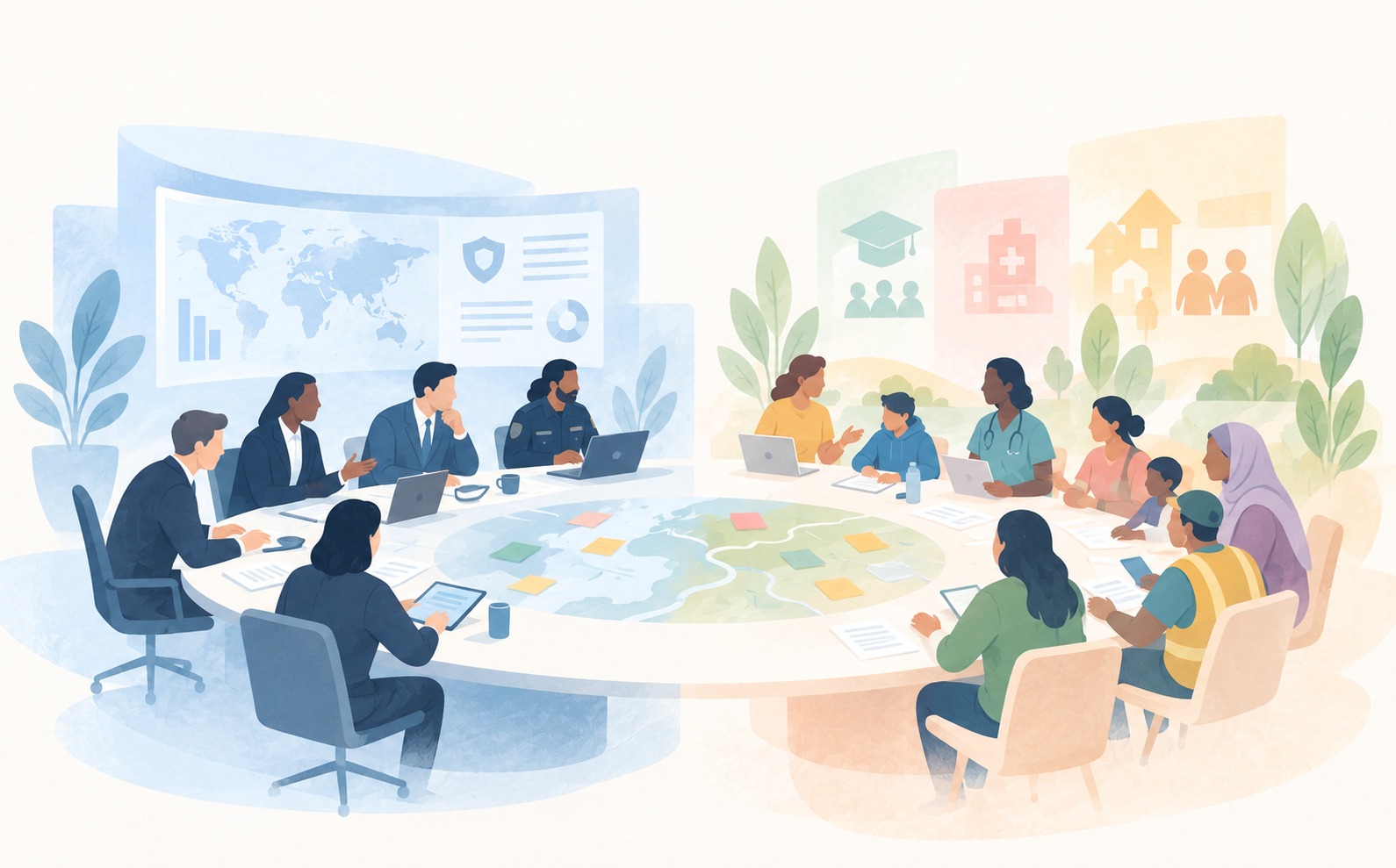
Hope Games widen participation in future-making. They treat people not simply as recipients of AI systems or subjects of institutional risk management, but as participants who can imagine alternatives, contest assumptions and shape pathways towards futures they value.
The Hope Atlas brings pathways from multiple games together. It makes visible who people believe can act, which routes for change they imagine, and what forms of flourishing they are trying to pursue.
The Hope Atlas is a growing research and practice project. I welcome ideas, reflections and opportunities to develop it with others.
Ideas & feedback
What works, what is missing, or how the Hope Game and Atlas could develop.
Running a Hope Game
Interest in using the game with a community, organisation, event or research project.
Research & collaboration
Questions, partnerships, research ideas or opportunities to work together.
Your own perspective
What would make an AI future feel genuinely hopeful to you?
Send me a note directly — there is no form or account required.
Email me →